Outdoor wall lights
Wall lights mount beside the door or on the garage piers and wash the wall up, down or both. They are the fixture people mean when they say architectural lighting.
Every one we cover, in order
The order is the catalogue's. Rank is never printed.
-
 Govee Outdoor UpDown Wall Light, 2-pack
2 LIGHTS · 600 LM EACH · IP66
The smart wall wash: a cone up and a cone down from one box, and the one wall light here we had no reservations about. Hardwired, so it is an electrician or a confident afternoon.
-
 Govee Outdoor Wall Light, 2-pack
2 LIGHTS · 1500 LM EACH · IP65
The single-direction version: a flat panel that washes the wall it is on. Brighter on paper than the UpDown at 1500 lm, but it is one cone, not two, which is the whole difference between them.
-
 Emliviar Outdoor Wall Lantern, 2-pack
2 LIGHTS · UL WET LOCATION
The safe black lantern. It takes whatever bulb you want, which means you choose the colour temperature and whether it is smart.
-
 hykolity Dusk to Dawn Outdoor Wall Sconce, 18 in, 2-pack
2 LIGHTS · ETL WET LOCATION
The dusk-to-dawn pick. Each fixture senses for itself, so a pair either side of a door will not switch at quite the same moment.
-
 Kichler Cylinders Outdoor Wall Sconce
1 LIGHT · UL WET LOCATION
A real designer fixture with an ordinary E26 socket, so you supply the smart or dusk-to-dawn bulb. Open at both ends: in a spot that takes wind-driven rain it needs the enclosed-lens accessory.
Price tiers are our own rough budget bands, not live prices. Check the listing for today’s price.
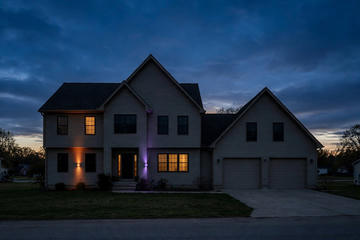
The same house, switched on.
Same camera, same minute, same sky. Only the lights changed.
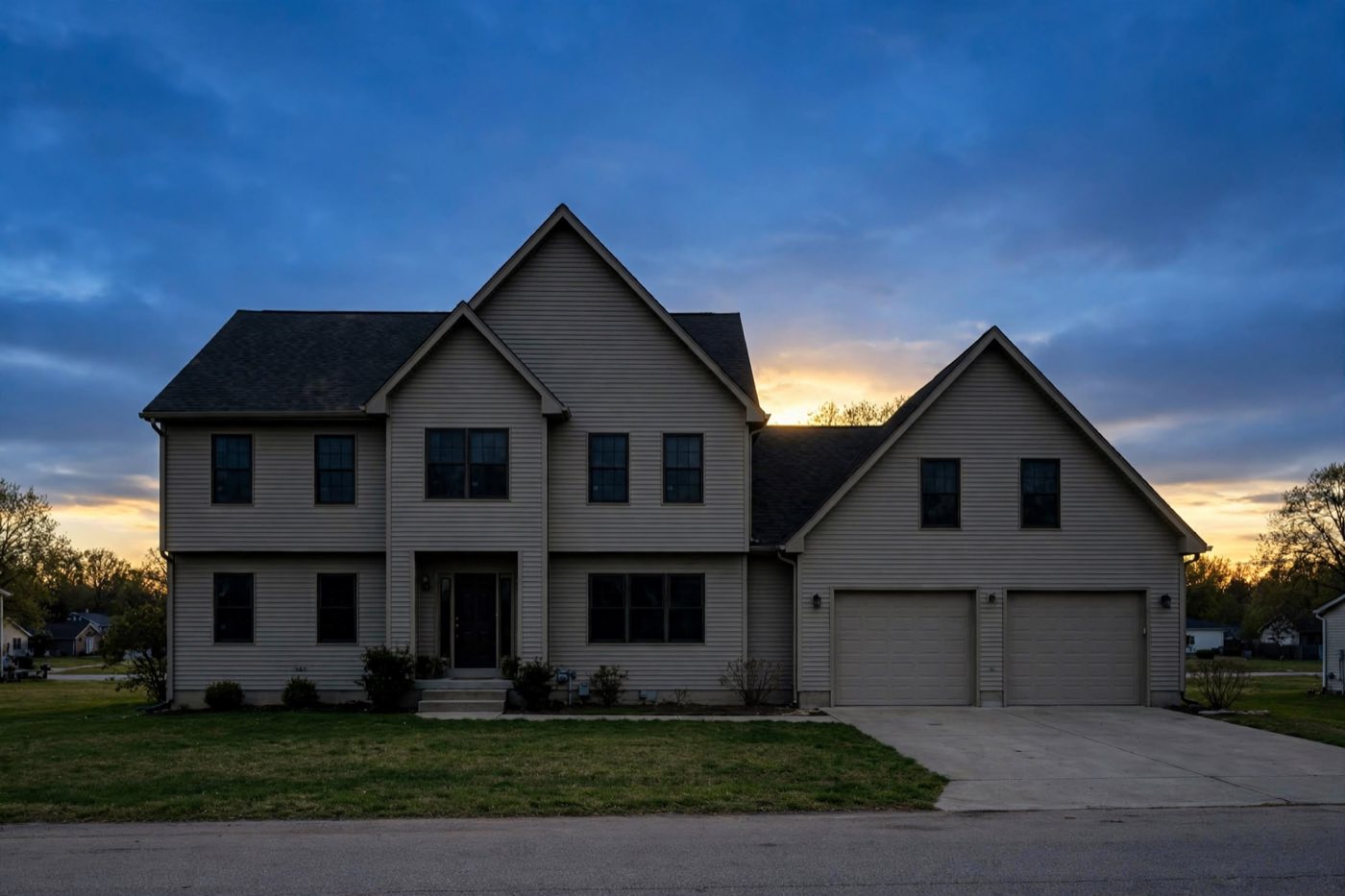
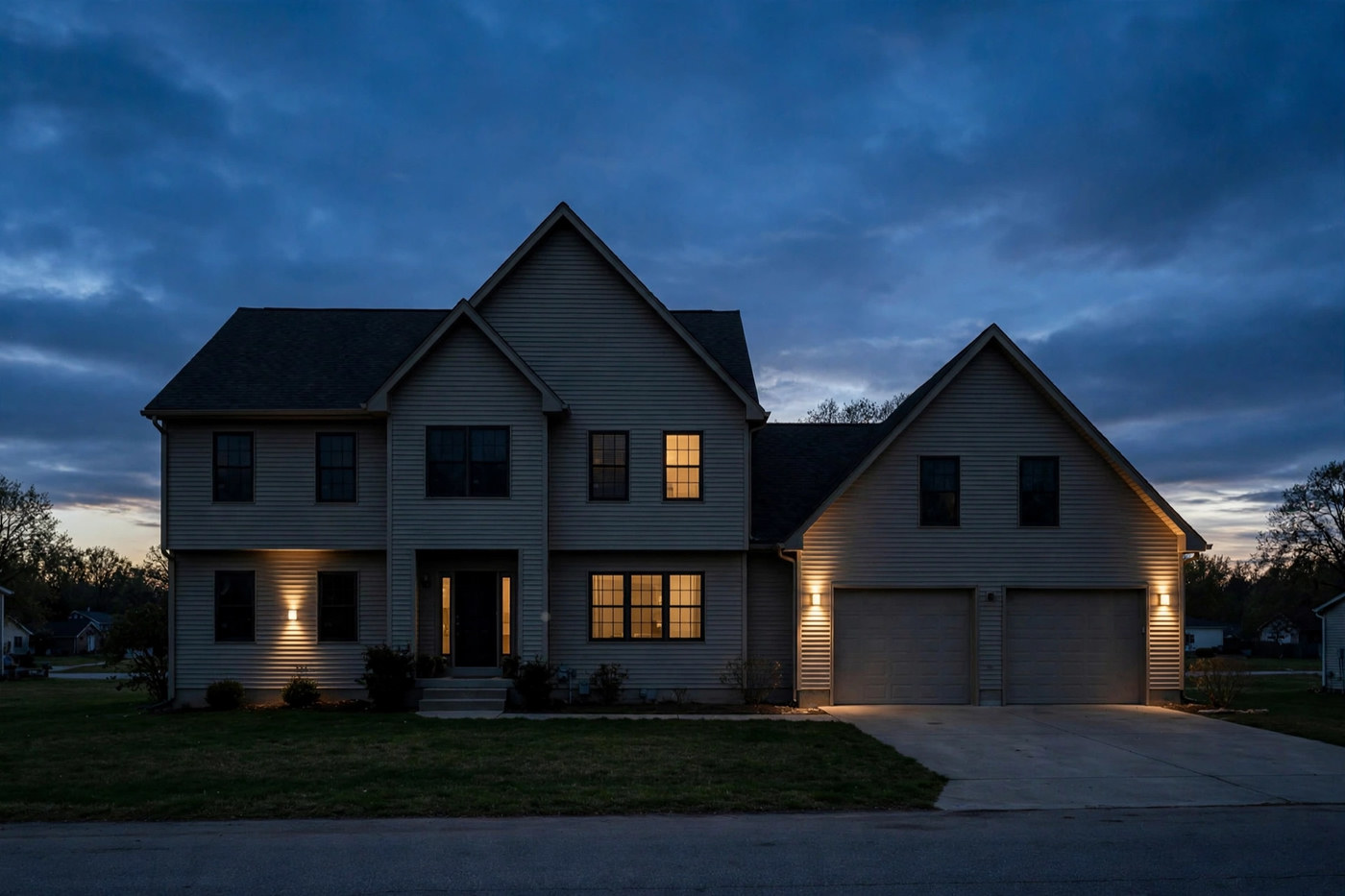
The Two-storey sample house, unlit and then with the UpDown 2 on it — 2 placed by the product's own count. See what was placed.
Same house, same dusk, each product.
Count and spacing come from each product's own listing; the dusk is our own render, generated by us rather than photographed.
The listing's numbers, our pictures.
Each product page carries what the listing and the maker's sheet say, on the date we looked, and a render placed by those numbers. We do not print prices, rank numbers, star ratings or review counts: a figure typed onto this page is stale the week after it is typed, and we would rather show you what the thing looks like on a house than what strangers typed about it.
We have not mounted any of them. Every product page has a section headed "What we could not check".
The questions that decide it.
Up, down or both?
A single-direction light washes one way and is the plain choice beside a door. An up-down light throws a cone each way from the same box and reads as a feature in its own right. On a small facade, one of each direction can be too much.
How bright?
Lumens per fixture is the number. Around 1500 lm washes a two-storey wall beside a door; a 400 lm sconce is a light to find the keyhole by.
Do I need an electrician?
A hardwired wall light replaces an existing fixture on a switched circuit and is a job for whoever you trust with mains wiring. Plug-in and low-voltage versions exist and the listing says which one you are looking at.
Buying the wrong length is the expensive mistake.
Not the wrong brand. Measure the run first, then pick from the list above.
Work out how many feet