Spotlights and floods
Spotlights sit on the ground and throw a beam up the wall, a chimney or a tree. They change a facade more than anything else in the line because they light the wall rather than sitting on it.
Every one we cover, in order
The order is the catalogue's. Rank is never printed.
-
 Linkind Smart Solar Spot Lights SL5C, 4-pack
4 SPOTLIGHTS · 3 W EACH · IP67
The pick of the smart spotlights, and it is solar — so treat it as an accent on a tree or a gable end, not as a way to wash a whole facade.
-
 LEONLITE Low Voltage LED Landscape Spotlight, 6-pack
6 SPOTLIGHTS · 5 W EACH · IP65
The mid-tier uplight to default to: cast aluminium, CRI 90, a narrow 45-degree beam that puts light up a tree instead of into your neighbour's window.
-
 SUNVIE 12V Low Voltage LED Landscape Lights, 8-pack
8 SPOTLIGHTS · 12 W EACH · IP65
The value pick, with one condition: a real cluster of these needed a joint re-soldered to fix an intermittent light. If a soldering iron is out of the question, buy the DEWENWILS.
-
 DEWENWILS 12V Low Voltage LED Landscape Spotlight, 4-pack
4 SPOTLIGHTS · 14 W EACH · IP65
The brightest single fixture here at 540 lm, and the cleanest complaint record of any budget spotlight we looked at. Fewer, brighter uplights is usually the better plan anyway.
-
 VOLT 12V LED Landscape Lighting Kit, 8 Spotlights and 4 Path Lights
8 SPOTLIGHTS · 5 W EACH · UL, DIRECT-BURIAL CABLE
The professional system in a box: solid brass, a real transformer, a lifetime warranty on the fixtures, and a price that is still a fraction of the install quote.
Price tiers are our own rough budget bands, not live prices. Check the listing for today’s price.
The same house, switched on.
Same camera, same minute, same sky. Only the lights changed.
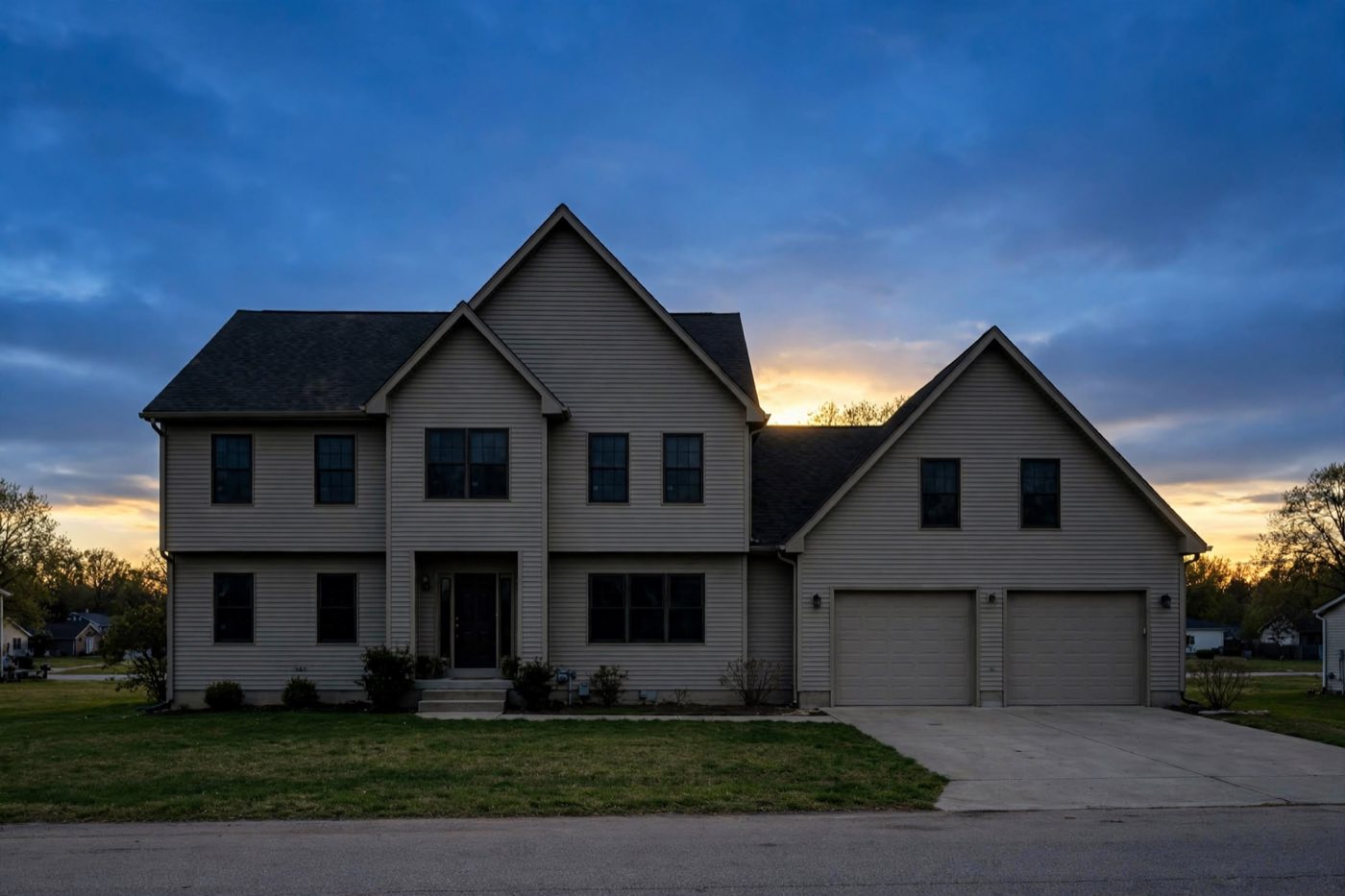
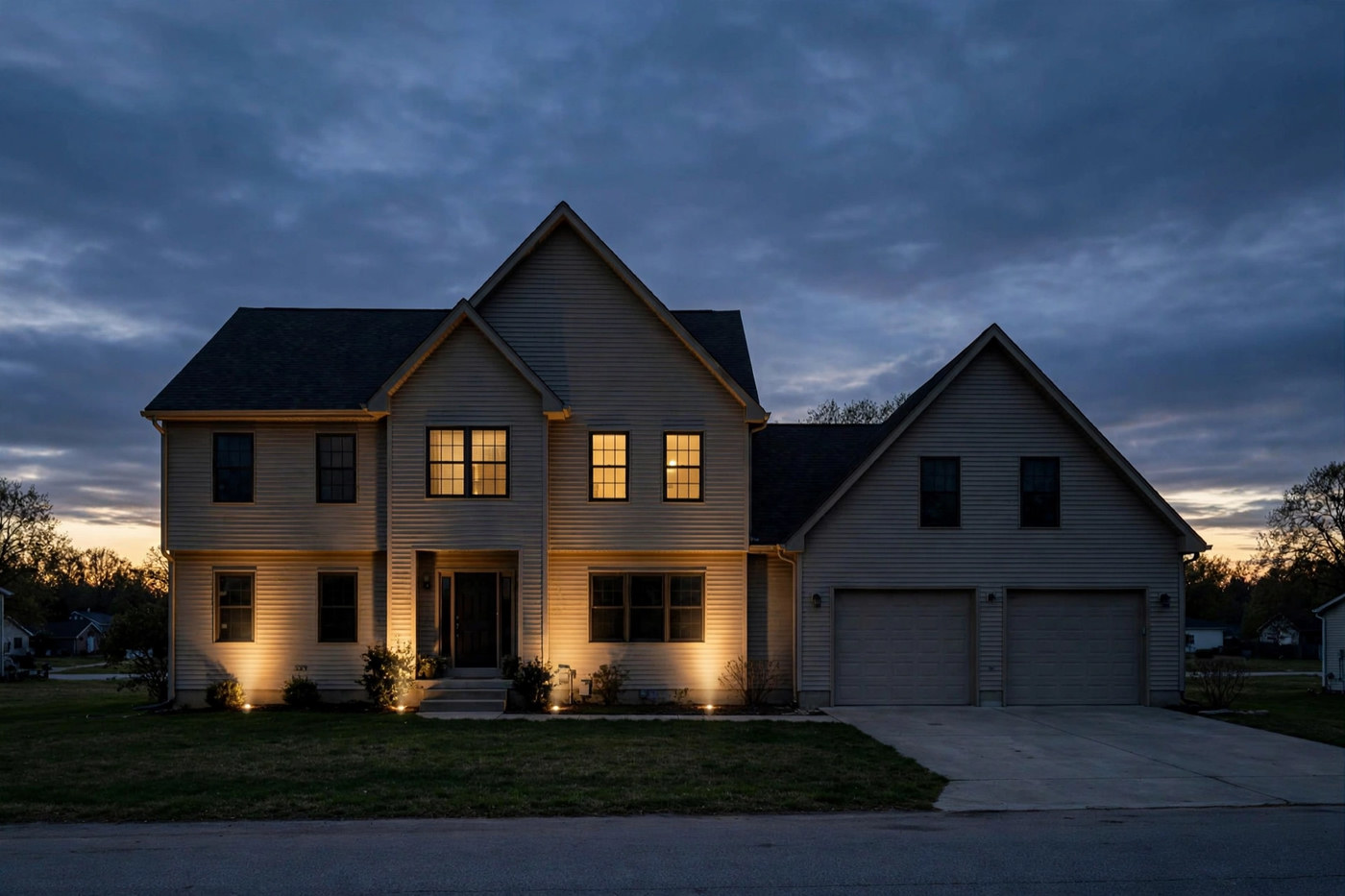
The Two-storey sample house, unlit and then with the SL5C 4 on it — 4 placed by the product's own count. See what was placed.
Same house, same dusk, each product.
Count and spacing come from each product's own listing; the dusk is our own render, generated by us rather than photographed.
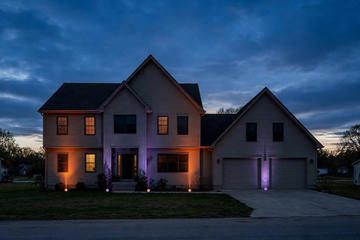
The listing's numbers, our pictures.
Each product page carries what the listing and the maker's sheet say, on the date we looked, and a render placed by those numbers. We do not print prices, rank numbers, star ratings or review counts: a figure typed onto this page is stale the week after it is typed, and we would rather show you what the thing looks like on a house than what strangers typed about it.
We have not mounted any of them. Every product page has a section headed "What we could not check".
The questions that decide it.
How many do I need?
One per feature. A gable, a chimney, a tree and the front door are four. Two on a flat two-storey front is plenty; more than that and the wall goes flat.
How bright?
Brightness is stated in watts or lumens per fixture, and the two do not track each other across brands, so compare lumens where a listing gives them. The wired fixtures here run from 5 to 14 W and 540 to 900 lm, which is a wall or a tree from a few feet out. The solar one is a fraction of that and lights one shrub. The render shows the beam stopping at the eave, which is what a well-aimed spot does.
Colour or white?
Almost all of this shelf is fixed warm white: a low-voltage landscape fixture is an LED at 2700K or 3000K and there is no colour in it to change. One product here does addressable colour, and it is the solar one. If colour on the facade is the point, the eave kits do it better than a ground spot ever will.
Buying the wrong length is the expensive mistake.
Not the wrong brand. Measure the run first, then pick from the list above.
Work out how many feet